Short Take- Imaging the Urbane- Control, and Representations of “Culture”
In 1545, Sebastiano Serlio published the first two volumes¹ of his Treatise on Architecture; On Geometry and On Perspective. As part of the emerging discipline of Architecture, they serve to develop and complicate the role of the designer as the curator of form. Collectively, the 5 books made a case for styles of architecture based on history, form, geometry, and representation while at the same time making it accessible to a wider public through printing and illustrations. With this conscious decision to use a more accessible format based and a combination of common and images, Serlio places the Architect in the role of cultural curator. This is especially notable in three images in On Perspective.
In On Perspective, Serlio explores the role of perspective as a mode of construction, a way to both image and imagine how geometry would be represented in physical space. The argument culminates in constructed images of urban spaces for three types of the Greek theater, the Tragedy, the Comedy and the Satyric.
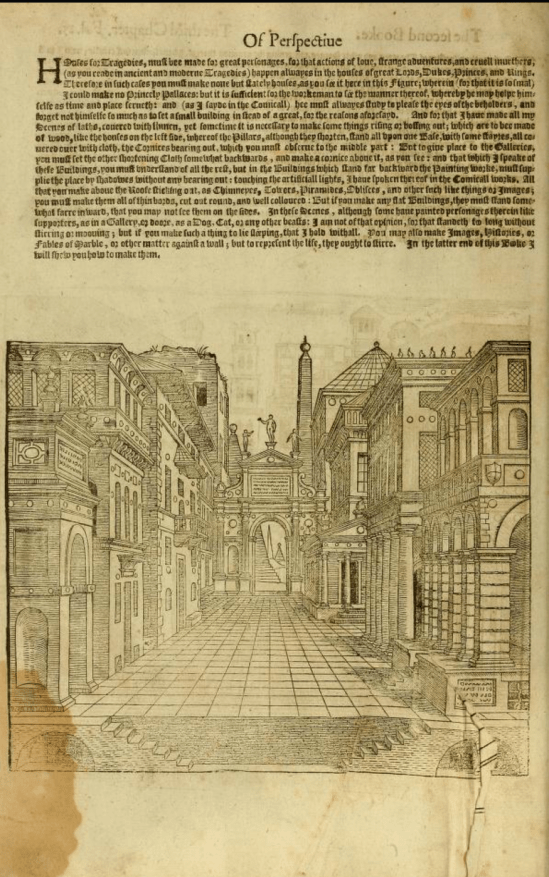
The Tragedy
The Tragic backdrop is the most formal of the three, constructed with a high degree of control along the edges of the street. An arch gateway with figures suggests a formal entry to the city along with an obelisk. Additional monuments in the background suggest both the surrounding landscape while referencing the antiquities, thus grounding this hypothetical city in history.
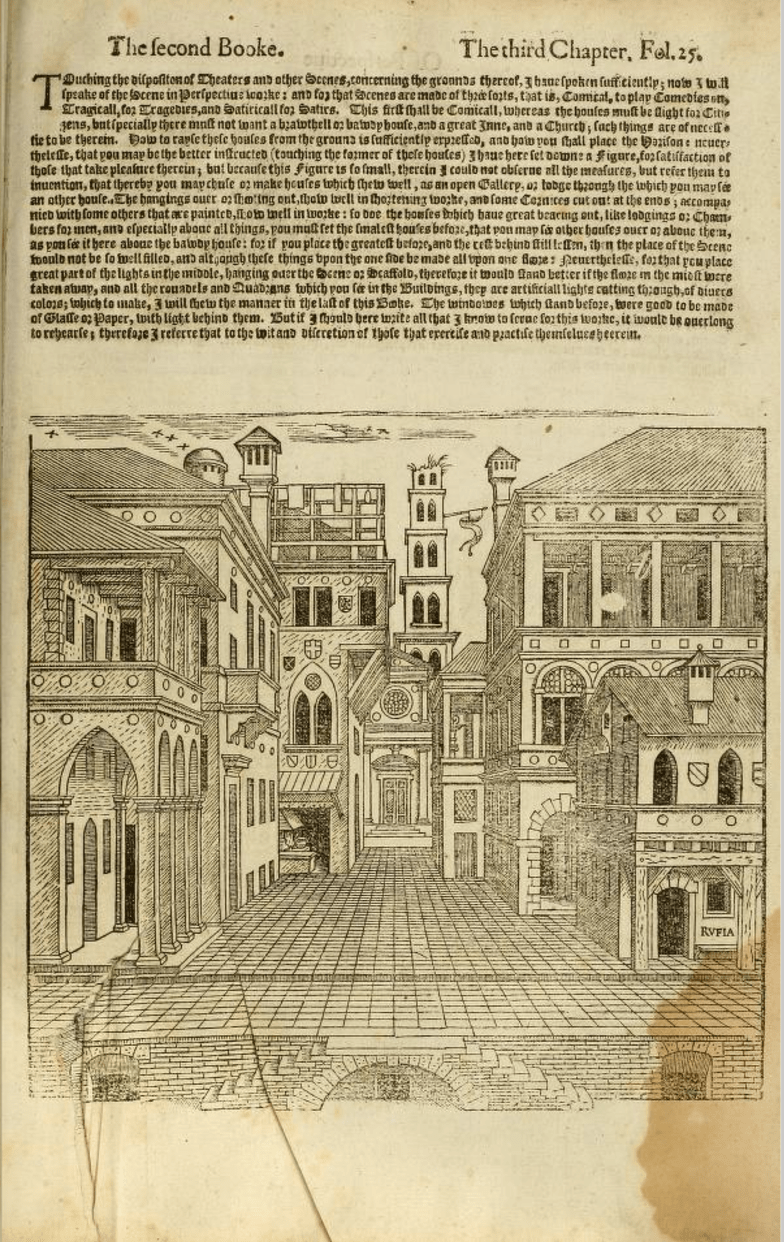
The Comedy
In comparison, the streetscape of the Comedy has more variation in building placement and suggested construction methods. Where the buildings in the Tragic streetscape are suggested to be made of stone, the Comedy has buildings that appear to be made of wood. The tower in the background appears to be incomplete or damaged. The entire collection of building forms is more chaotic, with a greater degree of vertical variation.
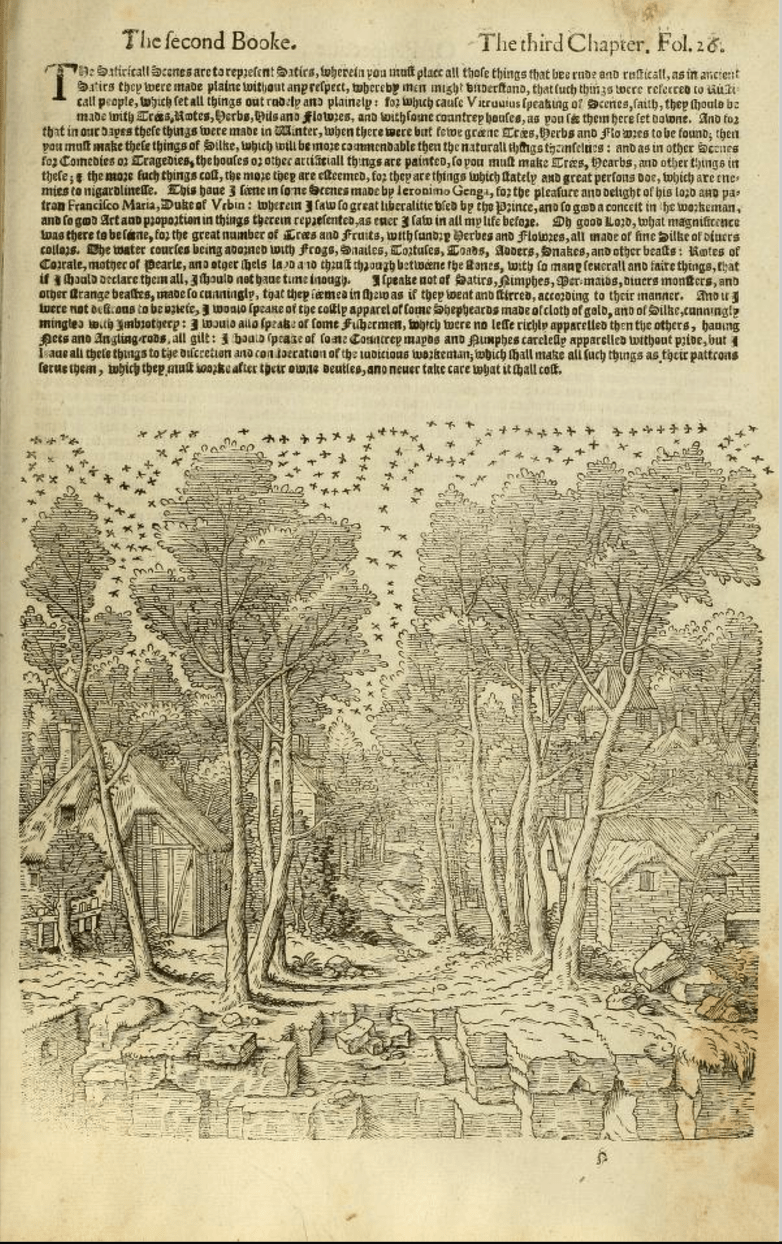
The Satyric
The Satyric backdrop represents the greatest degree of contrast between the three. In this setting, the viewer is decidedly placed in an exurban setting. The clearly delineated street present in the other two settings gives way to a path that is more of a byproduct of habitual use than designed intent. The buildings lining the path are dominated by the tree and the steps illustrated in the foreground are rusticated and show a great deal of deterioration.
While these comparisons may not appear to be significant, it is important to remember that theater was not only entertainment but also provide instruction in behavior. As a result, when Serlio illustrates the Tragic performance with a more formalized approach, he is making recommendations about the types of persons who are meant to occupy the spaces and the type of construction that is best suited to their station. When combined with the presence of the performers, urbane life is described.
This makes Serilo’s decision to use the vulgar tongue instead of the learned language of Latin and important one. The choice to use Italian creates accesses to a larger base of individuals, encouraging patronage. But it creates a group of people who are consuming the images and the implied behavior, arguably crossing over from information into one of the earliest forms of media.
1- The Third and Fourth Volumes had been published on 1537 and 1540 respectively.
 Making Agency